
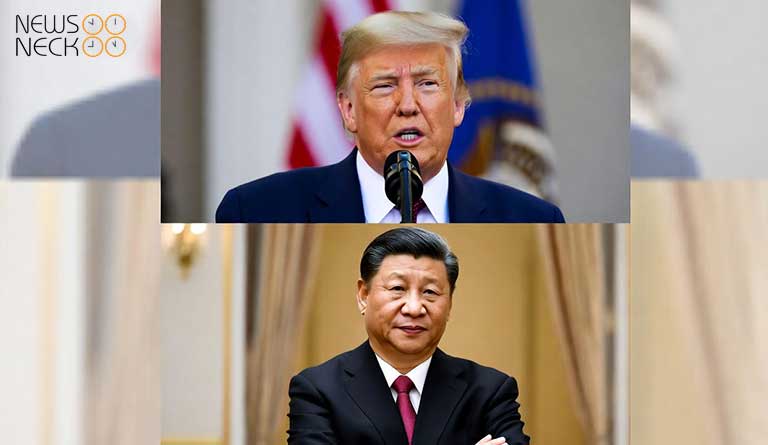
A New Round of Talks Begins in Kuala Lumpur
The tension between the United States and China has once again taken center stage in global politics. Over the weekend, top economic officials from both sides gathered in Kuala Lumpur Malaysia, hoping to stop their long brewing trade war from spiraling out of control.
The meeting took place quietly, with few details made public, but the stakes could not be higher. The talks are meant to prepare the ground for an upcoming face to face meeting between U.S. President Donald Trump and Chinese President Xi Jinping next week in South Korea. Both leaders are expected to discuss trade, tariffs, and technology restrictions issues that have strained relations between the two superpowers for years.
Why the Meeting Matters
In recent weeks, tensions have sharply increased. President Trump has threatened to impose 100% tariffs on Chinese goods starting November 1, as a reaction to China’s new export controls on rare earth magnets and minerals materials that are vital for making everything from smartphones to fighter jets.
At the same time, the U.S. Commerce Department expanded its export blacklist, banning American companies from selling products to thousands more Chinese firms. China saw this as a direct attack on its growing technology sector and responded with restrictions of its own.
These moves have shaken the fragile peace that was built earlier this year, when U.S. Treasury Secretary Scott Bessent, Trade Representative Jamieson Greer, and Chinese Vice Premier He Lifeng managed to secure a short-term trade truce after months of negotiations.
Now, the question is whether the two sides can rebuild that trust or if they’re heading toward another painful round of economic conflict.
A Meeting Filled with Uncertainty
Chinese trade negotiator Li Chenggang was seen arriving with He Lifeng at the Merdeka 118 Tower, the world’s second-tallest building and the venue for these high-stakes discussions. Yet, both governments have stayed silent about the agenda or the possible outcomes.
While leaving Washington for his Asia trip, President Trump shared some of the topics he plans to discuss with President Xi. These include helping American farmers hurt by China’s ban on U.S. soybeans, the situation in Taiwan, and even the case of Hong Kong media tycoon Jimmy Lai, who remains in prison under China’s national security laws.
“We have many important matters to discuss with President Xi, and he has plenty he wants to address with us as well.” I think we’ll have a good meeting,” Trump said before boarding Air Force One.
The Economic Stakes
Experts say the talks in Malaysia could decide whether the world’s two largest economies will pull back from confrontation or slide deeper into one.
According to Josh Lipsky, an economist at the Atlantic Council, the biggest hurdle is the fight over technology. “The U.S. wants China to lift its export controls on rare earth materials, but that’s China’s strongest card,” he explained.
If no deal is reached, analysts warn that both sides could return to aggressive tariff increases. During the earlier stages of the trade war, duties reached as high as 100%, hurting businesses and consumers across both nations.
For now, the hope is to extend the current truce, which lowered tariffs to around 55% on U.S. goods and 30% on Chinese products. But this agreement expires on November 10, and time is running out.
You Might Like it: Baba Vanga Predictions Meets Donald Trump Policies
The Bigger Picture: Power, Politics, and Pressure
China’s restrictions on rare earth exports announced on October 10 were aimed at limiting the materials’ use in military systems, but Washington sees them as an attempt to control the global supply chain. U.S. officials, including Bessent and Greer, have called it a “global power grab,” warning that such moves could spark a chain reaction across global markets.
In response, the Trump administration is reportedly preparing new restrictions on high-tech exports to China, such as jet engines and advanced software. The U.S. has also launched an investigation into what it calls China’s “failure” to meet the terms of their 2020 Phase One Trade Deal, which was supposed to end the first major round of the trade war.
What Comes Next
As Trump’s plane heads toward Asia, one thing is clear the next few days will shape the future of U.S. China relations. If both sides can find common ground, they might just prevent another economic storm. But if talks fail, the world could once again face rising prices, disrupted supply chains, and political tension that stretches far beyond trade.
For now, all eyes are on Malaysia, where behind closed doors, diplomats and negotiators are trying to write the next chapter in a story that affects everyone from American farmers and Chinese factory workers to consumers around the globe.
Author: Yasir Khan
Date: 25 Oct, 2025
For More Updates, Visit Newsneck