

Is a New Technology Really Driving Historic Job Cuts Or Just Covering for Bad Business?
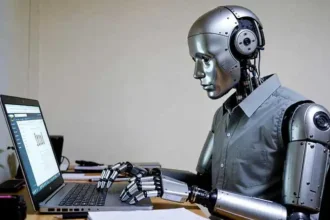
The headlines tell a simple, scary story. Thousands of white-collar jobs are vanishing, and the culprit, we’re told, is Artificial Intelligence. From corporate towers to retail headquarters, the message is the same: to stay competitive, companies must replace people with algorithms.
But a deeper look reveals a more complicated picture. The truth behind the massive layoffs rocking Corporate America is less about a robotic takeover and more about old-fashioned business problems: over-hiring, shaky strategies, and a convenient new scapegoat.
This is the phenomenon of “AI-washing” and it’s creating a cloud of confusion over the true health of the economy.
A Wave of Pink Slips
The numbers are staggering. This year alone, companies like Amazon, UPS, and Target have announced plans to eliminate more than 60,000 roles. These aren’t just numbers on a spreadsheet; they are tens of thousands of careers and families suddenly thrown into uncertainty.
In a normal economy, the government’ monthly jobs report would help us understand these cuts. But with that data currently unavailable due to a government shutdown, each new layoff announcement sounds louder and more alarming. It leads to a frightening question: Are we at the start of a white-collar recession driven solely by AI?
Some companies are certainly saying so. The CEO of Klarna proudly stated AI helped him shrink the company’s staff by 40%. Duolingo stopped using contractors for work that AI could handle. Salesforce cut 4,000 customer support roles, claiming AI can now do half of that work.
The pattern seems clear. But experts are sounding the alarm, suggesting we shouldn’t believe everything we hear.
The “AI-Washing” Excuse
According to business professors and labor analysts, the role of AI in these layoffs is being greatly exaggerated. For many companies, “AI” is a trendy, futuristic excuse for cuts they wanted to make anyway.
“We spend a lot of time looking carefully at companies that are actually trying to implement AI, and there’s very little evidence that it cuts jobs anywhere near like the level that we’re talking about,” says Peter Cappelli, a management professor at the Wharton School. “In most cases, it doesn’t cut head count at all.”
He describes the process of integrating AI as “enormously complicated and time-consuming.” So why the rush to blame AI? Cappelli points to two other powerful forces at play.
First, fear. When companies see their competitors cutting jobs, they feel pressure to do the same, fearing they might miss a crucial trend. “If it looks like everybody is cutting, then you say, ‘They must know something we don’t know,’” Cappelli explains.
Second, Wall Street rewards it. In the eyes of many investors, layoffs are a sign of a company becoming “lean and efficient.” Blaming the cuts on a powerful new technology like AI makes the decision sound smart and forward-thinking, often giving the company’s stock price a boost.
You Might Like it: Is AI Really Behind the Wave of Job Cuts?
The Real Reasons Behind the Cuts
So if AI isn’t the main driver, what is? The answers are as varied as the companies themselves, and they often point to classic business missteps.
Take Starbucks. The coffee giant is cutting 2,000 corporate jobs not because a robot can make a Latte, but because its sales are slowing down. This is part of a larger turnaround effort by a new CEO trying to fix the business.
Look at Intel. The tech company is laying off 15% of its workforce because it made a classic error: it over-invested in building computer chips without enough customer demand to buy them.
Then there’s Meta. Its cuts are about removing layers of management and trying to make its massive company operate more nimbly, a common struggle for corporate giants.
John Challenger, CEO of a major job placement firm, sees this as a potential turning point. “These job cuts do suggest that the dam may be breaking as the economy slows,” he says, noting that the earliest signals are coming from retail, shipping, and distribution.
Case Study: The World’s Largest “Startup”
Perhaps no company illustrates the complex reality better than Amazon. The company is planning its largest-ever round of corporate layoffs, affecting 14,000 people.
Is AI the reason? Surprisingly, Amazon’s own CEO, Andy Jassy, says no. He explains that the cuts are about cutting “corporate fat” and reducing bureaucracy. During the pandemic, Amazon went on a hiring spree, doubling its workforce. Now, Jassy says the company has too many layers and needs to get back to operating like a “startup.”
Here’s the twist: while Amazon isn’t yet replacing most workers with AI, it is cutting jobs to free up money to invest billions in AI technology. It’s a subtle but important difference. The layoffs aren’t caused by AI, but they are funded by savings that will be poured into AI for the future.
The Bottom Line
The story of today’s layoffs is not a simple sci-fi thriller where machines rise up and take our jobs. It is a more familiar tale of corporate America correcting its own mistakes—over-hiring, failed strategies, and bloated structures.
AI is a powerful new tool, and it will certainly change the nature of work. But in the current wave of job cuts, it is often playing a supporting role, not the lead. It’s the perfect, modern-day excuse for decisions that are, at their core, very old-school.
For workers and investors, the lesson is clear: when you hear a company blame AI for its layoffs, look closer. The real reason is almost certainly more grounded, and often, far more revealing about the company’s true health.
Author: Yasir Khan
Date: 04 Nov, 2025
For More Updates, Visit Newsneck