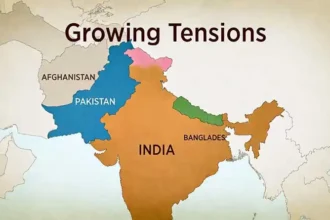

A former prime minister sentenced to death, living safely across the border. A tribunal demanding justice, a neighbor staying silent. This is the diplomatic storm brewing between Bangladesh and India.
In what marks the most severe judgment ever handed down to a former leader in Bangladesh’s history, Sheikh Hasina has been sentenced to death for crimes against humanity. The charges stem from her government’s brutal crackdown on student protesters in 2024. But there’s a twist that transforms this legal verdict into an international standoff: Hasina isn’t in Bangladesh to face the consequences. She’s in India, where she has lived safely for more than a year, completely beyond the reach of Bangladeshi courts.
Now, Dhaka is demanding her return. India remains conspicuously silent. And the world is watching to see how this political drama unfolds.
How Did We Get Here?
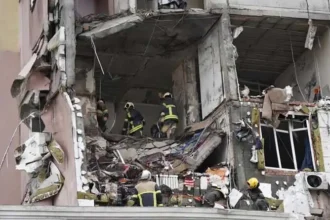
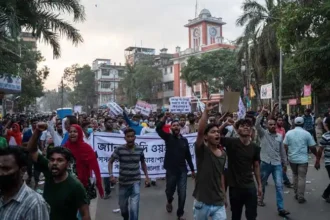
To understand this extraordinary situation, we need to rewind to 2024. Bangladesh erupted in massive student protests that year, with young people taking to the streets demanding change. What happened next shocked the nation and the international community. The Hasina government responded with force—violent, deadly force.
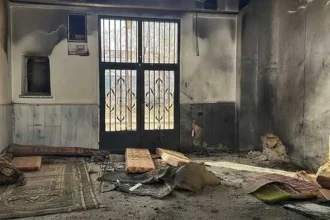
Protesters were met with live ammunition, mass arrests, and state-sanctioned brutality. The streets of Dhaka ran red with the blood of students whose only weapons were their voices and their demands for a better future. Human rights organizations documented widespread abuses. Families mourned their children. The nation watched in horror as peaceful demonstrators were treated as enemies of the state.
The crackdown became so severe that Hasina’s grip on power eventually crumbled. She was ousted from office, but not before the damage was done. Hundreds were killed. Thousands were injured. Countless families were destroyed.
You Might Like Reading: Rahat collaborates with Bengali singer
The Escape to India
When the political tide turned against her, Sheikh Hasina did what many embattled leaders do—she fled. But she didn’t just disappear into obscurity. She crossed the border into India, Bangladesh’s giant neighbor and historically complex ally.
India took her in. For over a year now, Hasina has been living on Indian soil, protected from the legal and political consequences waiting for her back home. It’s a safe haven that has become a diplomatic headache.
The Death Sentence That Cannot Be Carried Out
The tribunal in Bangladesh didn’t hold back. After examining evidence of the 2024 crackdown, judges found Sheikh Hasina guilty of crimes against humanity—some of the most serious charges that can be brought against any leader. The punishment? Death.
It’s the harshest sentence Bangladesh has ever imposed on a former prime minister. It sends an unmistakable message: no one, regardless of their previous power or position, is above accountability for mass atrocities.
But here’s where the legal system hits a brick wall of geopolitical reality. A death sentence means nothing if the convicted person is sitting comfortably in another country. Hasina remains in India, drinking tea while her former nation demands her head. The tribunal’s verdict, as powerful as it is on paper, cannot be enforced without her physical presence in Bangladesh.
Bangladesh’s Demand: Send Her Back
Dhaka isn’t taking this situation lightly. The Bangladeshi government has formally demanded Hasina’s extradition—the legal process where one country requests another country to hand over someone accused or convicted of crimes.
For Bangladesh, this is about more than one person. It’s about justice for the families who lost children in the protests. It’s about accountability for state violence. It’s about showing that democracy and human rights matter more than political connections.
The demand puts enormous pressure on India to act. But extradition isn’t simple, especially when it involves politics, death sentences, and two countries with a complicated relationship.
India’s Deafening Silence
What has India said about all this? Nothing. Absolutely nothing—at least not publicly.
India’s silence is calculated and telling. New Delhi finds itself in an extraordinarily delicate position. On one hand, there’s Bangladesh, a neighbor demanding justice and expecting cooperation. On the other hand, there’s Sheikh Hasina, a former ally who ruled Bangladesh for years and maintained generally friendly relations with India.
India’s decision—or non-decision—will have consequences that ripple far beyond this single case. If India refuses to extradite Hasina, it risks seriously damaging relations with Bangladesh, which could have economic, security, and diplomatic fallout. If India does hand her over, it sets a precedent and potentially alienates political allies in the region who might one day need refuge themselves.
There’s also the death penalty factor. India has complex legal positions on capital punishment and extradition. Many countries refuse to extradite individuals who face the death penalty unless guarantees are made that the sentence won’t be carried out. Will India use this as a reason to keep Hasina? Or will political considerations override legal niceties?
What Happens Next?
Right now, Sheikh Hasina’s fate hangs entirely on what India decides to do. Every day that passes with her safely in India is another day that the families of victims in Bangladesh wait for justice. It’s another day that the diplomatic tension builds.
Several scenarios could unfold:
India extradites Hasina: This would be the most dramatic outcome. Hasina would face the death penalty in Bangladesh, and justice—at least in the eyes of the tribunal—would be served. But it would be shocking given India’s year-long protection of her.
India refuses and offers permanent asylum: This would deeply anger Bangladesh but would show that India prioritizes political loyalty and regional stability over accountability. Hasina would live the rest of her life in exile, free but forever unable to return home.
A compromise emerges: Perhaps India negotiates with Bangladesh for a reduced sentence or a guarantee of life imprisonment instead of execution. This middle path could satisfy both countries’ needs while avoiding the death penalty dilemma.
The situation drags on indefinitely: The most likely scenario in the short term. India continues its silence, Bangladesh continues its demands, and Hasina continues living in limbo—free but exiled, safe but condemned.
Why This Matters Beyond Bangladesh
This standoff is about more than one woman’s fate. It’s a test case for accountability in South Asia. It asks hard questions: Can powerful leaders be held responsible for atrocities? Do international borders provide immunity from justice? What happens when legal verdicts clash with political realities?
For students and activists across the region, the answer to “What happens to Sheikh Hasina?” will send a powerful message—either that fighting for democracy can bring real consequences for oppressors, or that the powerful will always find shelter when their crimes catch up with them.
As the diplomatic chess game continues, one thing is certain: Sheikh Hasina’s story is far from over. The death sentence has been delivered, but whether it will ever be carried out depends entirely on a decision being made—or avoided—in New Delhi.
The world waits. Bangladesh demands. India stays silent. And Sheikh Hasina remains in her Indian sanctuary, living proof that in international politics, justice is never simple and power always complicates the pursuit of accountability.