

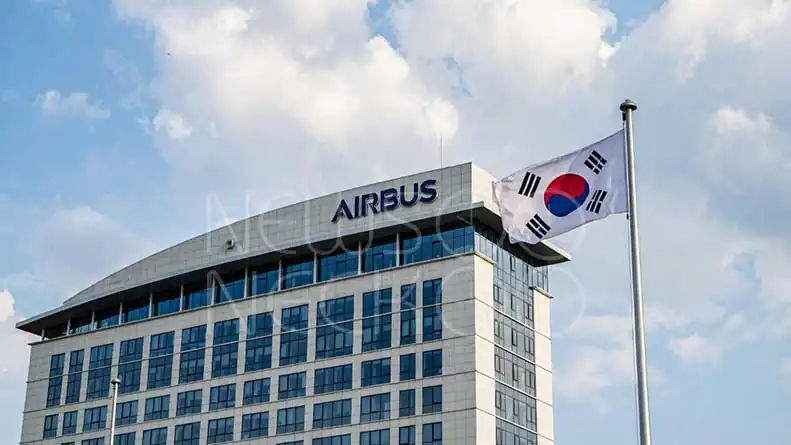
New Daejeon Tech Hub Marks Deepening Aerospace Partnership
After half a century of collaboration, European aerospace giant Airbus is making its boldest move yet in South Korea—establishing a dedicated technology hub that will shape the future of flight.
DAEJEON, South Korea – In a move that signals South Korea’s rising status as a global aerospace powerhouse, Airbus has officially launched its newest Tech Hub in the heart of the nation’s research and development epicenter. The November 18, 2025 announcement represents far more than just another corporate office opening—it’s a strategic bet on Korean innovation that could reshape the future of aircraft, defense systems, and space technology.
Located in Daejeon, a city that has earned its reputation as South Korea’s “Silicon Valley of Science,” the new Airbus Tech Hub isn’t just about maintaining relationships. It’s about pushing the boundaries of what’s possible in aerospace engineering, leveraging Korea’s cutting-edge capabilities to solve some of aviation’s most pressing challenges.
You Might Like Reading: ‘Horizon’ plane’s futuristic shape could revolutionize flying
Why Daejeon? The Perfect Storm of Talent and Technology
Airbus didn’t choose Daejeon by throwing a dart at a map. This city of innovation houses a concentrated cluster of world-class research institutes, universities churning out top-tier engineering talent, and a thriving ecosystem of technology companies. It’s where academic brilliance meets industrial ambition—exactly the environment Airbus needs for breakthrough innovation.
“Daejeon offers the perfect synergy between advanced academia and industrial ambition, making it the essential base for joint development of future technologies that will drive the industry forward,” explained Mark Bentall, Head of R&T Programme at Airbus, during the launch ceremony.
For Airbus, tapping into this ecosystem means accessing some of the world’s brightest minds working on problems that could define the next generation of aircraft. It’s about being where innovation happens, not just reading about it in research papers years later.
Three Pillars Supporting the Future of Flight
The Tech Hub isn’t a scattershot approach to research. Airbus has identified three critical focus areas that align perfectly with South Korea’s industrial strengths:
Future Energy Technologies: As the aviation industry faces mounting pressure to reduce carbon emissions and achieve sustainability goals, developing alternative energy sources and propulsion systems has become mission-critical. Korea’s advanced capabilities in battery technology, hydrogen systems, and energy management make it an ideal partner in this quest for cleaner skies.
Advanced Lightweight Composites: Every kilogram shaved off an aircraft’s weight translates to fuel savings and extended range. The development of next-generation composite materials—stronger, lighter, and more durable than current options—represents a key competitive advantage. Korean companies have proven expertise in advanced materials science, making this collaboration a natural fit.
Next-Generation Defence and Space Technologies: From satellite communications to defense systems, the convergence of aerospace and space technology is accelerating. Korea’s growing space program and sophisticated defense industry provide fertile ground for joint development in these strategic sectors.
A 50-Year Partnership Reaches New Heights
This Tech Hub launch doesn’t come out of nowhere. Airbus and South Korea share a relationship that stretches back more than five decades, beginning in 1974 when Korean Air placed its first order for the original A300B4 widebody aircraft. That initial order was just the opening chapter of what has become an extensive industrial partnership.
“After five decades of successful industrial partnership with Korea, this step to launch the Airbus Tech Hub in Daejeon is a clear signal of our deepening commitment,” Bentall emphasized. “The Tech Hub allows Airbus to tap into advanced technologies in Korea, which will help fast-track future aircraft technologies and continue to develop Korea as our trusted, long-term partner.”
Today, South Korea isn’t just a customer—it’s a vital supplier and innovation partner. Major Korean aerospace companies like Korea Aerospace Industries (KAI) and Korean Air Aerospace Division (KAL-ASD) manufacture critical components that go into Airbus’ global aircraft programs. Wing structures, fuselage assemblies, and composite elements for the A320, A330, and A350 families all have Korean DNA in them.
The numbers tell a compelling story: Airbus’ procurement activities in Korea currently sustain approximately 6,000 highly-skilled jobs and pump about $600 million into the local economy annually. That’s not just business—that’s economic impact that touches communities across the nation.
Sealing the Deal: Three Strategic Agreements
To ensure the Tech Hub hits the ground running, Airbus signed three Memorandums of Understanding during the launch ceremony, each designed to accelerate collaboration and remove bureaucratic roadblocks.
The first MoU, inked with Korea’s Ministry of Trade, Industry and Resources (MOTIR), establishes a framework that enables Airbus to quickly launch research and innovation projects within Daejeon’s technology ecosystem. Speed matters in aerospace development, and this agreement ensures that good ideas don’t die waiting for approvals.
The second MoU, signed with Daejeon Metropolitan City, commits local government support to expedite Airbus’ research initiatives across the city’s technological landscape. When city government and global corporations align their goals, innovation accelerates.
The third agreement, with the Korea International Trade Association (KITA), focuses on something particularly interesting—leveraging KITA’s open innovation platform to identify and engage new partners. This isn’t just about working with established players; it’s about discovering the next generation of innovative Korean companies that could become crucial suppliers or research partners.
Projects Already Taking Flight
The Tech Hub isn’t waiting around to prove its value. Airbus announced specific partnership projects right at launch, demonstrating the hub’s immediate operational focus.
In a collaboration with LIG Nex1, Airbus is developing advanced space chip antenna technology used for transmitting and receiving communication signals—critical components for both satellite systems and next-generation aircraft connectivity.
Separately, Airbus is working with EMCoretech to develop active filtering technologies needed for electrification applications. As aircraft increasingly incorporate electric systems, managing electromagnetic interference becomes crucial for safety and performance. This technology could prove essential for hybrid and electric aircraft development.
Part of a Global Innovation Network
Korea’s Tech Hub doesn’t exist in isolation. It becomes the fourth addition to Airbus’ expanding global network of innovation centers, joining existing hubs in Japan, the Netherlands, and Singapore. This distributed approach allows Airbus to tap into regional strengths and expertise while maintaining connections across the network.
Each hub brings unique capabilities to the table. Singapore focuses on digital technologies and manufacturing innovation. The Netherlands contributes aerospace engineering heritage and sustainable aviation expertise. Japan offers advanced materials and robotics capabilities. Now, Korea adds its strengths in energy systems, composites, and space technology to the mix.
The network effect is powerful. Breakthroughs in one hub can quickly spread and be adapted by others, creating a multiplier effect on innovation speed.
Building on Recent Momentum
The Tech Hub opening follows closely on the heels of another significant Airbus investment in Korea—the recent opening of CTC (Composite Technology Centre), a wholly-owned Airbus subsidiary in Busan. This new office, partnering with Busan Techno Park, focuses specifically on research and development of advanced composite materials and processes for aerospace applications.
Having both the Daejeon Tech Hub and the Busan CTC office creates a powerful one-two punch for Airbus in Korea, with complementary capabilities that reinforce each other. Daejeon drives broad innovation across multiple technology domains, while Busan dives deep into the specialized world of advanced composites.
What This Means for the Future
The establishment of the Airbus Tech Hub in Korea sends several clear signals to the global aerospace industry:
Korea has arrived as an aerospace innovation powerhouse. Being selected as one of only four global Tech Hub locations puts Korea in elite company and recognizes its technological capabilities.
The future of aerospace is collaborative. No single company or country can solve all the challenges facing the industry. Success requires partnerships that combine complementary strengths.
Investment follows capability. Airbus isn’t making this move out of charity or political considerations—it’s betting on Korean innovation because it sees real technological leadership and problem-solving ability.
For South Korea, the Tech Hub represents validation of decades of investment in R&D infrastructure, education, and industrial development. For Airbus, it’s a strategic move to access cutting-edge capabilities that could provide competitive advantages in an increasingly challenging industry landscape.
As aircraft become more electric, more efficient, and more connected, the technologies being developed in Daejeon could end up in aircraft flying passengers and cargo around the world. That’s the kind of impact that makes this more than just another corporate announcement—it’s a glimpse into the future of flight, being written right now in the heart of South Korea’s innovation capital.











One Comment
Thank you for your sharing. I am worried that I lack creative ideas. It is your article that makes me full of hope. Thank you. But, I have a question, can you help me?