

Despite Trump’s claim of a ceasefire, fighting continues at the Thai-Cambodian border.
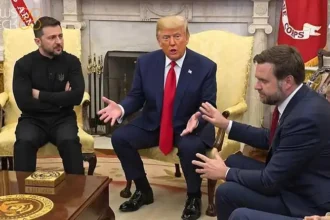
Hours after U.S President Donald Trump announced that the two countries had reached a ceasefire, heavy fighting persisted along the Thailand-Cambodia border on Saturday, with reports of airstrikes and rocket fire. Trump’s account has been contested by officials from both nations, resulting in a sharp discrepancy between diplomatic declarations and the actual situation on the ground.
The Thai foreign ministry explicitly rejected the claim that a truce had been reached. Prime Minister Anutin Charnvirakul stated Thailand would continue military actions until threats to its land and people ceased. On Saturday, the Thai military reported its forces had been targeted by Cambodian rocket fire, which seriously injured two civilians in Sisaket province.
Cambodia’s defense ministry reported that Thai fighter jets carried out airstrikes on Saturday morning. Prime Minister Hun Manet, in comments made after his call with Trump, thanked him for peace efforts but pointedly did not mention agreeing to an immediate ceasefire.
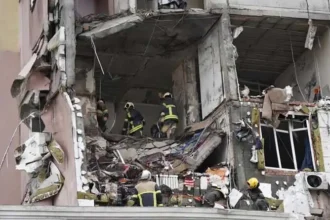
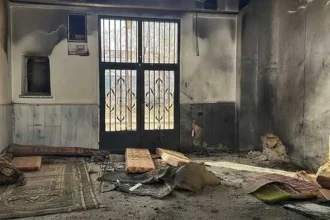
The recent violence, which began on December 7, has derailed a previous peace accord. Casualty figures are mounting. The Thai military acknowledges 11 of its troops have been killed this past week, while hundreds of thousands of people have been displaced on both sides of the border. Cambodia has reported at least 11 civilian deaths.
A long standing dispute between two nations
If we analyze what is currently happening between the two countries, it becomes clear that the conflict has lasted for a very long time and has deep historical roots. These roots go back to the period of French colonial rule in Cambodia, when border lines were drawn. The maps created in 1907 were different from the boundaries defined in earlier agreements.
A key flashpoint is the ancient Preah Vihear temple. The International Court of Justice awarded sovereignty of the temple to Cambodia in 1962, a ruling that still fuels nationalist sentiment in Thailand. Tensions dramatically escalated in 2008 when Cambodia sought UNESCO World Heritage status for the site.
After major clashes in July of this year killed dozens, a ceasefire was brokered by Malaysia with pressure from Trump, who threatened trade consequences. This deal was formalized in October but remained fragile. Thailand suspended its participation in November, arguing the security threat had not decreased.
Humanitarian Crisis and Next Steps
The human cost of the renewed fighting is severe. More than half a million people have been displaced. Cambodia has shut its border crossings with Thailand until further notice, complicating aid and movement.
Analysts suggest the conflict is being driven by complex internal politics in both nations. With Thailand’s government in a transitional period after parliament was dissolved, and Cambodia’s leadership consolidating power, there is a noted lack of strong leadership to de-escalate the situation.
The path forward is uncertain. While international figures like Trump and Malaysia’s Prime Minister Anwar Ibrahim continue to offer mediation, the fundamental lack of trust and the deep-seated historical grievances between the two neighbors suggest a lasting peace will be difficult to achieve.
For More Visit: NewsNeck