

Thailand and Cambodia Agree to Ceasefire After Border Fighting
Thailand and Cambodia have agreed to stop fighting along their disputed border after several weeks of deadly clashes. Officials from both countries announced the ceasefire on Thursday. The fighting had involved heavy gunfire and artillery and resulted in the deaths of at least eight soldiers. Thousands of civilians were also forced to leave their homes because of the violence.
The deal was reached just as worries were rising about tensions along the border. Under the ceasefire deal, both countries will withdraw troops from disputed areas near ancient temple sites that have been a source of conflict for many years. A joint border commission will be set up to monitor the ceasefire and work on long-term measures to prevent similar clashes in the future.
Thailand’s Foreign Minister, Surapong Tovichakchaikul, said the ceasefire was reached after emergency talks held in Jakarta. These talks were mediated by Indonesian officials. Cambodia’s government also confirmed the agreement in a separate statement, describing it as a necessary step to protect civilians and restore stability in the border region.
The fighting began about three weeks ago near the Preah Vihear temple, a UNESCO World Heritage site located on the border between the two countries. Both Thailand and Cambodia claim parts of the surrounding land. Although small clashes have happened from time to time since 2008, this round of fighting was unusually intense, with both sides using heavy weapons.
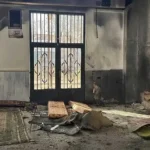
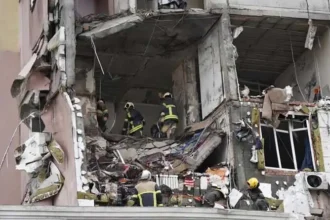
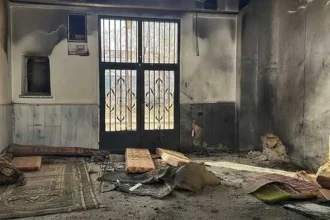
Residents living near the border said the violence was the worst they had experienced in years. Hundreds of families were forced to flee to temporary shelters after shells landed close to homes and schools. Some villagers said explosions could be heard throughout the night, and smoke was seen rising from forest areas where troops were stationed.
One Thai woman, who asked not to be named, said her family could not sleep because of the fear. She said the children were terrified by the constant noise of shelling. Her family spent five days in a school gymnasium before returning home earlier this week.
According to official figures, four Thai soldiers and four Cambodian soldiers were killed during the clashes. Dozens of others were injured. Both governments accused each other of starting the fighting, but it has been difficult to independently confirm these claims because the area is remote and access for journalists has been limited.
The border dispute between Thailand and Cambodia goes back many decades. It is linked to unclear boundaries left over from the French colonial period. In 1962, the International Court of Justice decided that the Preah Vihear temple belongs to Cambodia. But the ownership of the surrounding land was left unclear, and this has continued to cause disagreements between the two countries. The issue often sparks strong nationalist feelings, making it politically difficult for leaders to reach a compromise.
Thailand and Cambodia share a border over 800 kilometers long, much of which is poorly marked. This makes misunderstandings between troops more likely. Even small incidents can quickly escalate into serious clashes when soldiers feel threatened or under pressure to defend their country’s claims.
Regional observers had warned that the fighting could spread or involve other parties if it was not contained. The Association of Southeast Asian Nations, known as ASEAN, called for dialogue. Indonesia, as the current ASEAN chair, played a leading role in pushing for talks. Indonesian Foreign Minister Marty Natalegawa traveled between Bangkok and Phnom Penh to help bring both sides to the negotiating table.
As part of the ceasefire agreement, both countries will set up observation posts to monitor troop movements. Military commanders will also establish a direct communication line to prevent misunderstandings. The deal includes plans for joint patrols in the future, although details about when this will begin have not yet been finalized.
Human rights groups welcomed the ceasefire but warned that past agreements between the two countries have sometimes collapsed quickly. They said the real challenge will be whether both governments can manage strong nationalist pressures at home while continuing diplomatic efforts.
Thailand’s Prime Minister, Yingluck Shinawatra, is facing criticism from opposition politicians who say she is being too soft on Cambodia. In Cambodia, Prime Minister Hun Sen’s government has used the border issue to rally public support. For both leaders, keeping the ceasefire in place is important for political reasons as well as for the safety of civilians.
On Thursday, families who had been displaced by the fighting began returning to their villages. Some people remained nervous about the situation, but schools reopened in certain areas and farmers went back to their fields. Aid workers said basic supplies were being distributed to families whose homes or property were damaged by shelling.
The economic impact of the clashes has mostly been limited to the border region. Tourism at nearby historical sites dropped sharply during the fighting, but tour operators expect visitors to return now that the violence has stopped. Trade between Thailand and Cambodia, which is worth billions of dollars each year, was not seriously disrupted.
Although the ceasefire has reduced the immediate risk of fighting, it does not settle the deeper border dispute. Solving that problem will need strong political will from both countries and may require more international mediation or legal action.
For now, the border is quiet and the fighting has stopped. How long this ceasefire lasts will depend on how well both sides follow the monitoring arrangements and whether they can control nationalist pressures at home.
For more visit: NewsNeck