

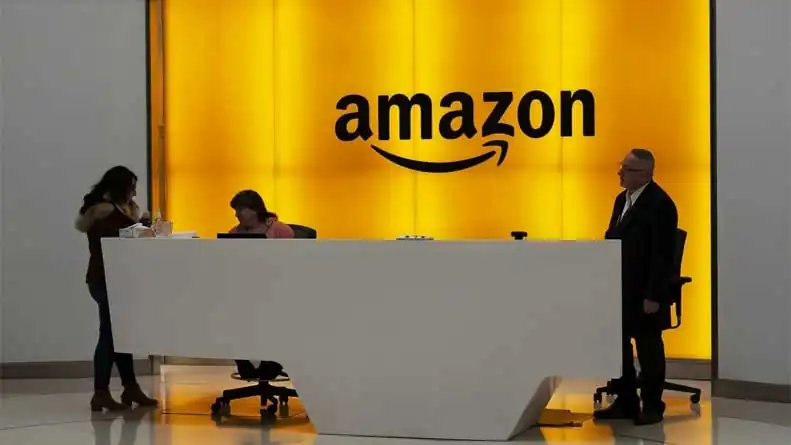
Amazon Layoffs AI Push: Human Cost of a Flatter Future
NewsNeck: Jan 28,2026-Imagine coming to work on a Wednesday, opening an email, and learning your job no longer exists. This week, that stark reality arrived for roughly 16,000 corporate employees at Amazon. The announcement marks the second massive round of cuts since last October, when another 14,000 workers were let go. In less than a year, the retail and tech giant has decided that 30,000 corporate roles are no longer necessary. The reason? A single-minded drive to remove bureaucracy, increase “ownership,” and free up billions of dollars to chase the future—a future built on artificial intelligence.
For the workers affected, the language of corporate strategy offers little comfort. They are not just statistics in a blog post; they are people with mortgages, families, and careers suddenly upended. Their dismissal speaks to a larger, more unsettling story happening across the tech world: a fundamental reimagining of what a company should be, often at the direct expense of the people who help run it.
A Repeated Shock, A Clear Pattern
This is not a one-time correction. Last October’s cuts were framed as a difficult but necessary adjustment after years of rapid hiring. At the time, Amazon signaled this was not over, warning that more cuts would come in 2026 as it looked for “additional places we can remove layers.”
Now, that promise—or threat—has been fulfilled. The scale is staggering. To put it in perspective, 16,000 people is more than the entire population of many small towns. These layoffs span across divisions, from Amazon’s retail empire to its cloud computing arm, AWS, which has long been its most profitable engine.
In a blog post announcing the decision, Beth Galetti, Amazon’s senior vice president of people experience and technology, framed the move as part of an ongoing effort to “strengthen our organization.” The goals, she wrote, are to reduce layers, increase ownership, and remove bureaucracy. It is the corporate equivalent of a gardener aggressively pruning a tree, cutting away branches not to kill it, but in the belief it will grow back stronger and more focused.
The “Why” Behind the Goodbyes: Bureaucracy vs. AI
So, what does this pruning mean? “Reducing layers” is corporate speak for flattening the company’s structure. It means removing middle managers and simplifying chains of command. The idea is that with fewer people approving decisions, projects can move faster. “Increasing ownership” pushes the responsibility for results onto smaller teams.
But the most telling part of Amazon’s statement is what it coincides with: a massive, company-wide push into generative artificial intelligence. AI is expensive. Developing new AI models, building the computing infrastructure to run them, and hiring top AI talent requires billions of dollars. For a company like Amazon, every dollar spent on a mid-level manager’s salary is a dollar not spent on AI chips or machine learning researchers.
The layoffs, then, are a brutal form of financial reallocation. Money saved on corporate salaries is money that can be pumped into what Amazon sees as the only race that matters: the AI race. It is a cold calculation, where human labor in some areas is deemed less valuable than machine intelligence for the future.
A “New Rhythm” of Anxiety?
For the employees who remain, the uncertainty is corrosive. In her note, Beth Galetti tried to offer reassurance, stating the company is not trying to create “a new rhythm” of broad layoffs every few months. “That’s not our plan,” she wrote.
Yet, the very next sentence sows doubt. “But just as we always have,” Galetti continued, “every team will continue to evaluate… and make adjustments as appropriate.” This is the new normal for corporate America: a state of permanent evaluation, where no role is ever truly safe. The goalposts are always moving. Today’s essential position is tomorrow’s “bureaucracy.”
This approach creates a workforce living under a shadow. How can employees innovate or think long-term when they fear their entire department might be deemed unnecessary in the next quarterly review? The push for “speed” and “ownership” can quickly morph into a culture of fear and paralysis.
The Bigger Picture: A Tech Industry Reset
Amazon’s pain is part of a wider tech industry convulsion. For over a decade, the mantra was “growth at all costs.” Companies hired aggressively, building sprawling teams for projects that might never materialize. The market rewarded this expansion. But now, the mood has shifted dramatically. The new mantra is “efficiency.” Investors want profitable growth, not just growth.
Across Silicon Valley, giants like Google and Meta have also conducted deep cuts after their own periods of over-hiring. They, too, are channeling vast resources into AI. What we are witnessing is not just a series of layoffs, but a structural reset of the entire tech economy. The industry is shedding the weight it gained in its adolescence to become a leaner, more focused—and arguably, more ruthless—version of itself.
The Human Equation
The numbers in the blog posts and financial reports tell one story. The human cost tells another. Behind the 16,000 notifications are 16,000 individual crises—suddenly interrupted careers, paused retirement plans, and the stressful scramble for new health insurance.
There is a cruel irony here. These same corporate workers helped build Amazon into a $1.8 trillion titan. They designed its logistics, marketed its products, and managed its teams. Now, in the company’s next chapter, many of them are seen as obstacles to progress, as “bureaucracy” to be removed.
Amazon will likely emerge from this period leaner and more focused on AI. Its stock price may even rise on the news, as investors cheer the cost-cutting. But the legacy of these decisions will be more than a healthier balance sheet. It will be a profound loss of institutional knowledge and a deep erosion of trust among the employees who are left to build this flatter, faster, and more automated future.
The true test for Amazon won’t be whether it wins the AI race, but whether the company that emerges remembers that its greatest asset has always been, and should still be, its people.
For more visit NewsNeck