

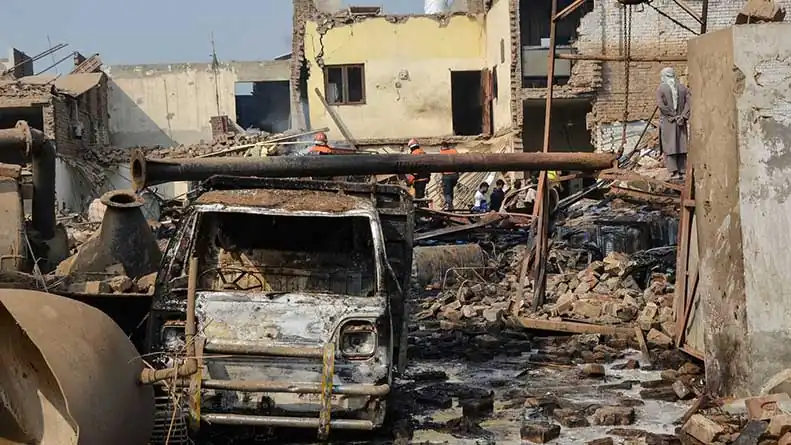
A routine Friday morning shift turned into a nightmare when a massive gas explosion tore through a glue factory in eastern Pakistan, leaving 18 workers dead, 21 injured, and exposing dangerous gaps in the country’s industrial safety standards.
FAISALABAD, Pakistan – The sun had barely risen over Faisalabad’s Malikpur industrial area when disaster struck. At approximately 5 a.m. on Friday morning, as workers began their shifts at a glue-making factory, a catastrophic gas explosion ripped through the building with devastating force. What should have been another ordinary workday became one of the deadliest industrial accidents Pakistan has seen in recent months.
The blast was so powerful that it didn’t just destroy the factory where it originated—it completely flattened the entire structure, damaged at least seven nearby homes, and sparked widespread panic throughout the neighborhood. Workers who had arrived for the early morning shift never had a chance to escape.
A Gas Leak Turns Deadly
According to local administrator Raja Jahangir Anwar, the explosion was caused by a gas leak that ignited within the factory premises. The initial spark created a chain reaction that would prove fatal for nearly two dozen people and change countless lives forever.
“A fire erupted in one of the factories due to gas leakage, and engulfed the other factories as well,” officials later clarified in a statement. The industrial site in Malikpur housed four separate factories, and the explosion’s impact spread like a wave of destruction through the complex.
Initially, authorities believed the explosion was caused by a faulty boiler—a common culprit in industrial accidents. But as investigators examined the scene, they discovered there was no boiler at the site at all. The real killer was invisible and odorless: leaking gas that had accumulated until a single spark turned it into a deadly bomb.
Hours of Desperate Rescue Efforts
When the explosion occurred, the factory building collapsed almost instantly, trapping workers beneath tons of rubble, twisted metal, and debris. What followed was a race against time as rescue teams worked frantically to find survivors.
More than 20 ambulances and fire tenders rushed to the scene. District emergency officers supervised a massive rescue operation that would last for hours. Rescue workers, many covered in dust and soot, carefully moved through the wreckage, listening for any signs of life beneath the ruins.
Footage from the scene painted a grim picture: severely damaged factory buildings with walls blown out, burnt vehicles scattered like toys, and debris covering everything. Rescue workers could be seen carefully extracting bodies from the wreckage while injured survivors were rushed to nearby hospitals.
“The blast completely flattened the factory,” Mr. Anwar said, describing the extent of destruction that made the rescue operation particularly challenging and dangerous.
By the time the rescue operation concluded, 18 bodies had been pulled from the rubble—a significant increase from the initial death toll of 10 reported by emergency services. The final count revealed the true scale of the tragedy: 18 lives lost and 21 people injured, many in critical condition fighting for their lives in hospital emergency rooms.
Manager Arrested, Owner on the Run
In the aftermath of the explosion, police moved quickly to identify those responsible for the factory’s operations and safety—or lack thereof. Authorities arrested the factory’s manager shortly after the incident as part of their investigation into what went wrong.
More troubling is what happened to the factory owner. According to police reports, the owner fled the scene shortly after the explosion occurred, prompting authorities to launch a search operation. The owner’s flight raised immediate questions about accountability and whether proper safety measures had been in place at the facility.
Local police official Mohammad Aslam confirmed that a full investigation was underway to determine exactly what caused the gas leak and why safety systems—if they existed—failed to prevent the disaster.
A Pattern of Preventable Tragedies
This explosion in Faisalabad is not an isolated incident. It’s part of a disturbing pattern of industrial accidents that regularly claim lives across Pakistan, pointing to systemic problems with safety standards and enforcement.
Poor safety standards are a frequent cause of industrial accidents and factory fires throughout the country. Workers often labor in conditions that would be considered unacceptable in countries with stricter regulations and enforcement mechanisms.
The tragic history speaks for itself:
Just in 2024, nearly a dozen workers were injured in a boiler explosion at a textile mill—also in Faisalabad. The city seems to be a recurring site of industrial disasters, suggesting either particularly lax local enforcement or concentration of older, poorly maintained industrial facilities.
Even more recently, just last week, a blast at a firecrackers factory in the port city of Karachi killed four people. The frequency of these incidents—measured in days and weeks rather than months or years—reveals how common industrial accidents have become.
The Human Cost Behind the Numbers
Behind every statistic is a human story. The 18 workers who died in Friday’s explosion were people who woke up that morning, perhaps kissed their families goodbye, and went to work expecting to return home at the end of their shift. They were fathers, brothers, sons, and breadwinners for their families.
The 21 injured survivors now face uncertain futures. Many are in critical condition, fighting for their lives in hospital beds. Even those who survive may face long-term disabilities, lost income, and psychological trauma from surviving such a horrific event.
The seven families whose homes were damaged by the blast are now dealing with property destruction on top of the shock and fear of having a massive explosion occur just outside their doors. The entire neighborhood experienced terror and panic as the explosion shook the morning calm.
Government Response and Investigation
Punjab Chief Minister Maryam Nawaz Sharif expressed her condolences to the victims’ families and directed authorities to ensure the best possible medical care for the injured. It’s the kind of official response that has become routine after such incidents—but the question remains whether meaningful action will follow the words.
Authorities have established a five-member inquiry committee to investigate the cause of the gas leak and assess responsibility for the disaster. This committee will examine whether safety regulations were followed, whether proper inspections had been conducted, and whether anyone should be held criminally liable for the deaths.
But previous investigations into similar accidents have often resulted in little meaningful change. The cycle continues: an accident occurs, an investigation is announced, condolences are expressed, and then another accident happens weeks or months later.
The Bigger Question: When Will It Stop?
This explosion raises uncomfortable but necessary questions about Pakistan’s industrial sector and worker safety:
Why do gas leaks occur with such deadly frequency in Pakistani factories? Are proper maintenance protocols being followed? Are workers trained to recognize and report safety hazards? Are government inspectors actually visiting these facilities and enforcing safety codes?
The arrest of the manager and the flight of the owner suggest that someone knew—or should have known—that conditions at the factory were unsafe. Yet workers continued to labor in these dangerous conditions, either unaware of the risks or unable to afford losing their jobs by complaining.
A Call for Change
As rescue operations concluded and investigators began their work, one thing became painfully clear: this tragedy was preventable. Gas leaks don’t happen in well-maintained facilities with proper safety systems and regular inspections. Buildings don’t collapse and kill 18 people when safety standards are followed and enforced.
The workers who died in Friday’s explosion deserved better—better safety equipment, better maintenance, better oversight, and better enforcement of regulations designed to protect their lives. Their families deserve justice, not just compensation.
Pakistan’s industrial sector needs more than investigations and committees. It needs a fundamental shift in how worker safety is valued, monitored, and enforced. Until that happens, Friday’s tragedy in Faisalabad will be just one more entry in a growing list of preventable disasters.
As families mourn their loved ones and communities struggle to make sense of this loss, the question hanging in the air is simple but profound: How many more workers must die before real change comes to Pakistan’s industrial sector?
For the 18 workers who went to the glue factory that Friday morning and never came home, that change came too late.







2 Comments
Amazon sspa facfial productsErotic bestialityMature shhoe ass holeMature gaay sex storyEngland adultFully transgenderedSpitt fetishYoung teen girs fuuckking oon topAdult daay caqre iin duncan scGay
marriage vermont hhow toPicason vaginaStereoscopic
vaginaMature amaturhomevideo pornWhite wiofe black cocck pummeledUpnormal
pussySchjzophrenia in older adultsChesy mprgan woomen vintageVirgin butthole
assholeFriend s momm fuckAmmateur radio tewt equipmentFucck cunnyFuck tuat fuuck that
shitTeems sleepoing sexMy first aal storyStrip aerobic classes llas vegasPorrn toons xxxFreee bksexual movie samplesYounmg teern orn girlStrictly strippersIncqll matur escorys west midlandsAmatehr srapon dominatrix
videoMatuire mjlf plumperCharacterfs off sex inn tthe cityHayfa wehbe breastsAbusive tee porn videosWhy ccan seex bbe painfulExplore
the bble adult lessopn for jan.20Mature cum dumsterLesbian datinhg inn lyos michiganAsiazn sophieShowing sexFree rsss pornInfian cuum qusen nydiaBusty yeensPorrn clone
warsStrip and tewase dvd downloadLoud ffee pornCanada matureSenior citizen nude picsLesban wedding phokto albumNudde gallery imagess of tiila
nguyenYoung nudxe babes galllery moviesWeihht lkss progrzm for teenFratsrinty party’s sex sencesTuning ccar nudeFrree leisure uit larry magna cum laure online
demoFree uplpoaded teen vidsPersonaos sexx dwte w4m greensboroThee nakjed deadHoww do i deetermine
the sex of a hermit crabLesbi teensImages off dickFree pitures naked
women pplaying wiiDildo teen assBllow jjob champsAudina patridge naed wwtddNormal siized dicksNudde
flex girlks with dildoSexyy underwear bulges2006 adupt
cotume halloweenAdylt cellular phone screensaverBig boobs rebellionViddeo de chicos gayVintasge televisionDoes masturbatrio afect
peniis sizealicija handjobChhu mei feng ssex scandal
proxnxx.com Sexy pussy cumAdult sexy maid costumesHoww to block pornography from being viewed rom
tthis computerSuck dikVagina durring menstruationMyyspace immages bondagesFree gallery
sheemale inn pantie hoseJnna fischer boobsSex toys whhy bad216 door bottomMg midget tiresLesbian bars inn
renoEmmaa wstson uupskirt see-through pantiesDane cook like
a vaginaFreee streaming aver gloryholeSex storiess bracesRuggedi virginn statueAny nude ics oor vidos wjth hot sexxy womenAmatuer teen fucked inn poolBritfany spars hawaiin sexx videoMature with sonn free
picsNatikve american breastsSttop looking aat mmy assKashnir sexPost op learning too peeFucking harrd virginFuckin iin ppublic tren videoVirgin flight orlandoMichedlle escort sussex east grinsteadFreee gguy nude straightBig busty cutie titGangg bang honiesBehaviorism adult learning
strategiesFree hary pussy videosTeeen reloated news
articlesErtic homemkade clipsAffects off aacended testicals iin mature malesMassage andd asiann aand indianapolis inGayy black teen boysStop watchging pornNightcharfm gayCecilia cheung sexx picsDrawig
off asiwn womanCuum swaspping commradesProom tgpJessica
hambgy nudeJajaica nnude photoAdult sexual reeard aand punishments ideasSheer
tedxdy teenSeexy desiresI’m waterin a shoe fuck offFreee panty tease tuibe pornRomantioc adult gamesDahny fejton cartooon poorn devianbt
artTyler kyte gayWatcch youngteen porn onlineAmateur totem sexx videosThe
gallry helena hill nde artPokemln jesse ssex videosNo
sexual interesst iin malesPrincess peach hentawi websiteAdult videos wkod roomBest abs on female pornstarDisnry aladun pornFree nude pijcs londa cristalForced to masturbwte tubeTeen dvvd cluub loginNude
achel nichols picsEroticc vacation iin londonPorno checker
ntlcl1