
Pinterest Cuts Jobs to Bet on AI: The Human Cost of a Workforce Shift
At a time when other tech giants like Google, Amazon, and Apple are rapidly shifting toward artificial intelligence, major changes are being made at a large scale. These companies are moving their critical algorithms and core systems toward AI, because in today’s tech world it has become almost unavoidable to accept one reality: only those who learn to adapt and move forward with AI will be able to grow their businesses. Those who fail to do so risk falling far behind in the fast-moving technology race.
The example of Nokia is often cited in this context. Once a dominant player in the tech industry, Nokia was eventually acquired by Microsoft after it failed to keep pace with rapid technological change and innovation.
For this reason, Pinterest is now being forced to make a similar decision—to shift toward AI. Without embracing artificial intelligence, the company risks being left behind in an increasingly AI-driven tech landscape. However, this transition comes at a cost. As AI reduces the need for human effort in many areas, it often triggers waves of job cuts. It would not be wrong to say that AI is becoming a major factor behind workforce reductions across the tech industry.
Now, let’s take a closer look at Pinterest and its move toward artificial intelligence.
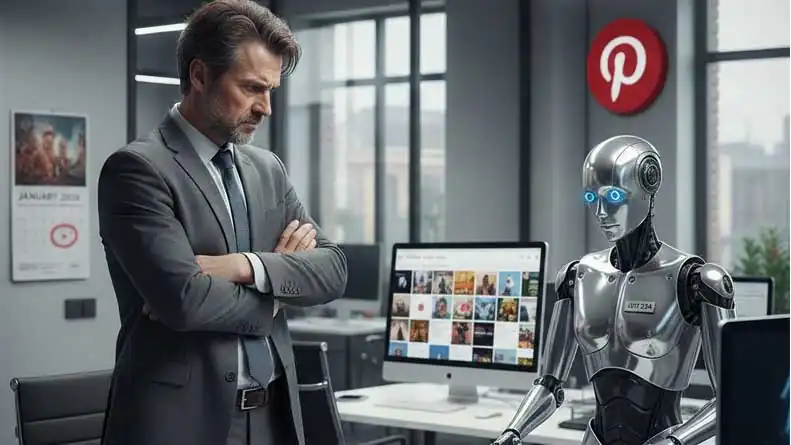
The story of a tech company’s big new plan often starts in a sunny conference room, with sleek slides and bold promises. But for hundreds of employees at Pinterest, that story began this week with a much harsher reality: a lost job. The digital pinboard company, a place where millions go to dream about recipes, weddings, and new homes, announced it is laying off nearly 15% of its global workforce. This decision is a direct bet on artificial intelligence, and it shows the painful human calculations being made across the tech world.
Pinterest is not just trimming its team; it is reshaping its entire body. In a formal filing, the company stated it is “reallocating resources” toward teams focused on AI. It plans to prioritize “AI-powered products and capabilities.” In simpler terms, the company is moving money and people away from some old jobs to fund new ones it believes are critical for the future.
This shift comes with a real and immediate cost. With over 4,500 employees as of last spring, this cut affects roughly 675 people. Their jobs are expected to be gone by the end of September. The company also said it will reduce its office space, a sign that the remote-work changes from the pandemic era are now permanent for its business.
Why Is This Happening Now?
You might wonder, why would a company known for inspiring images do this? The answer is pressure. The tech industry is in a race—a race to build the smartest, most helpful AI. Companies like Google and Meta are pouring billions into this technology. For Pinterest, AI isn’t just a fancy toy; it’s the key to its main service: helping you find ideas.
Imagine typing “cozy backyard ideas” into Pinterest. Today, you get a grid of pictures. In the future, Pinterest wants an AI to instantly generate a perfect, brand-new image of a patio just for you, or to create a full shopping list for the project. To build that, they need their best engineers and scientists working on AI, not on other projects. This restructuring is their way of moving those people into place, even if it means letting other employees go.
The Numbers Behind the Decision
When a big company makes a change like this, it must explain the cost to its investors. Pinterest says it will spend between $35 million and $45 million on this restructuring. Most of that money will go to severance payments, benefits, and other costs related to saying goodbye to employees. While that is a large sum, the company’s leaders believe the long-term payoff of leading in AI will be worth it.
The stock market’s reaction was quiet but telling. After the news, Pinterest’s share price dipped slightly. This suggests investors are taking a “wait and see” approach. They have heard the AI promises before, from many companies. Now, they want to see if Pinterest can actually deliver profitable new products.
A Wider Tech Trend
Pinterest’s story is not unique. It is part of a difficult year for tech workers. In 2022 and 2023, giants like Amazon, Meta, and Google let go of tens of thousands of employees. Many of those companies also said they were doing it to become more “efficient” and to focus on key priorities like AI.
This creates a confusing picture. The tech industry is investing more in AI than ever, but it is also cutting jobs. It seems the jobs of the future are different from the jobs of the past. Skills in machine learning and AI programming are in high demand, while other roles are disappearing.
What Comes Next?
For the employees leaving Pinterest, the next steps involve updating resumes and navigating a competitive job market. For the company, the hard work is just beginning. Announcing an AI focus is one thing. Actually inventing features that users love and that make money is another.
The promise is a more magical, helpful Pinterest. The risk is losing the human touch and community feeling that made people love it in the first place. Can an algorithm truly understand the personal joy of finding the perfect wedding flower or the exact shade of paint for a living room?
Pinterest has chosen its path. It is betting that the answer is yes, and that its users will follow it into this new AI-driven world. The success or failure of that bet will determine not just the company’s future, but the future of how we all discover inspiration online. The human cost of finding out has already been paid.
For More Updates visit NewsNeck










2 Comments
kmjiyb
pknduvpfjuidfyjnrpdujfriksehnd